
4JJ1 Engine Guide: Isuzu 3.0 D-TEQ Specs, Variants and Replacement Checks

The 4jj1 engine is Isuzu's 3.0-litre common-rail turbo-diesel used in several KB, D-Max and mu-X models. South African buyers should confirm the exact variant, model year and gearbox before purchasing a replacement.
The 4JJ1 has a displacement of 2,999 cc and uses a four-cylinder DOHC 16-valve layout.
Isuzu produced several versions with different turbo systems, compression ratios, emissions equipment and outputs.
This guide covers 4JJ1 specifications, D-TEQ applications, engine variants and replacement checks. Buyers can also review the Isuzu engine guide from LM Diversity Engines.

What Is the Isuzu 4JJ1 Engine?
The 4JJ1 is a 2,999 cc four-cylinder turbo-diesel engine developed by Isuzu.
It uses high-pressure common-rail direct injection and an aluminium DOHC cylinder head with four valves per cylinder.
The engine became well known in Isuzu's 3.0-litre bakkie and SUV range.
Different generations use different turbochargers, electronics and emissions systems.
Isuzu 4JJ1 Engine Specifications
The 4JJ1 uses a long-stroke design with a 95.4 mm bore and 104.9 mm stroke.
Isuzu 4JJ1 3.0 diesel engine specifications | |
Specification | 4JJ1 Details |
|---|---|
Engine family | Isuzu 4J |
Engine code | 4JJ1 |
Capacity | 2,999 cc / 3.0L |
Configuration | Inline four-cylinder |
Bore | 95.4 mm |
Stroke | 104.9 mm |
Valvetrain | DOHC, 16 valves |
Fuel system | High-pressure common rail |
Aspiration | Turbocharged and intercooled |
Timing drive | Chain and gear drive |
Compression ratio | Varies by version and generation |
Output | Varies by 4JJ1 version and market |
Which Isuzu Vehicles Use the 4JJ1 Engine?
Isuzu used the 4JJ1 across bakkies, SUVs and selected commercial vehicles.
Isuzu KB 300 D-TEQ
Isuzu D-Max 3.0 diesel
Isuzu mu-X 3.0 diesel
Isuzu Rodeo and related overseas-market models
Selected Isuzu light-commercial and truck applications
The same 4JJ1 family can use different external equipment across these vehicles.
LM Diversity Engines also currently lists multiple Isuzu replacement engine options.
Does the Isuzu KB 300 D-TEQ Use the 4JJ1?
Yes. Several Isuzu KB 300 D-TEQ generations use the 3.0-litre 4JJ1 diesel family.
South African specifications changed during the KB's production life.
Later KB 300 models produced 130 kW and 380 Nm.
Earlier 4JJ1 applications can use different outputs, turbo systems and transmission combinations.
Does the Isuzu D-Max Use the 4JJ1 Engine?
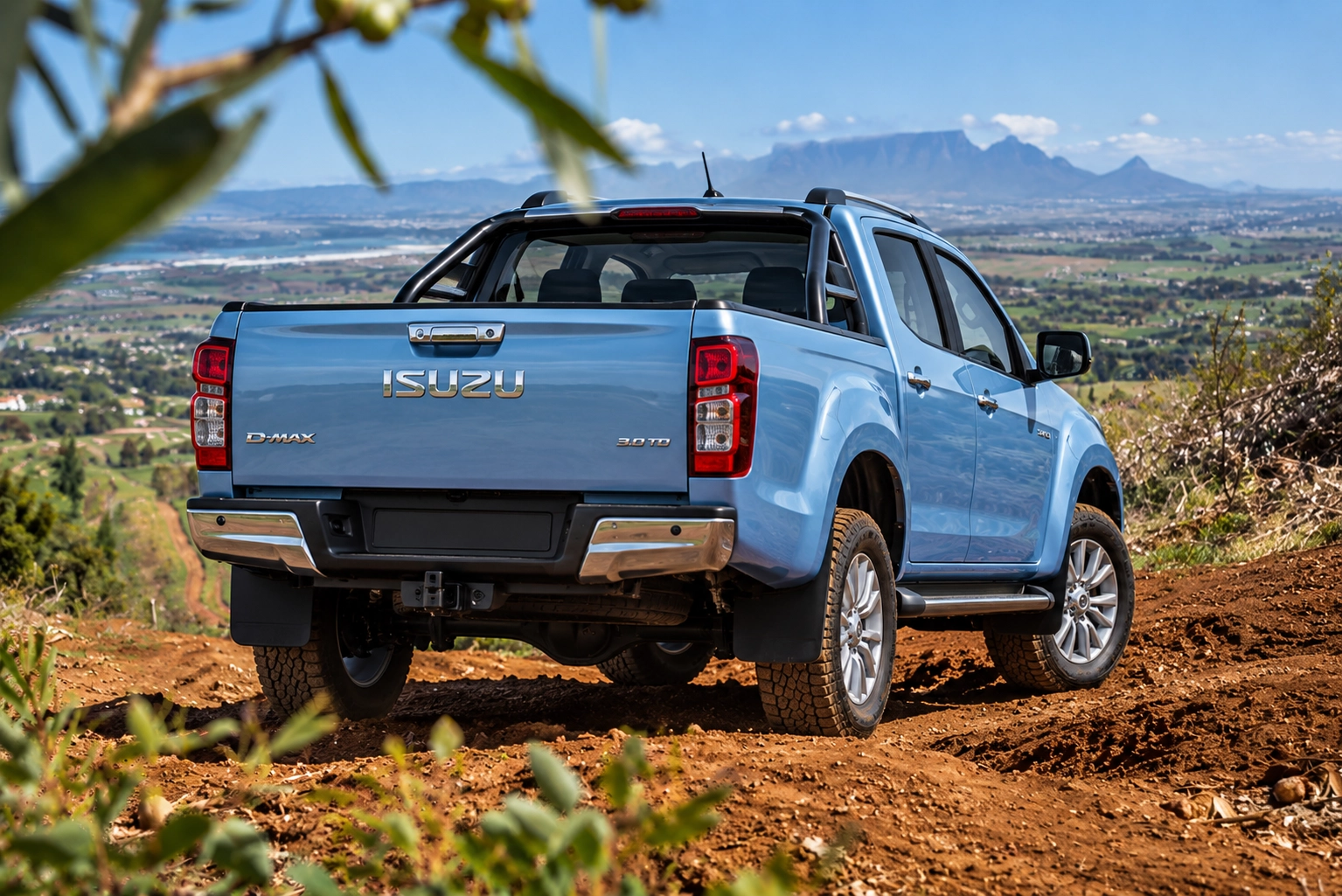
Yes. Previous-generation Isuzu D-Max 3.0 models commonly use the 4JJ1.
High-output versions use a variable-geometry turbocharger and high-pressure common-rail fuel system.
A widely used later specification produces 130 kW at 3,600 rpm and 380 Nm.
Do not assume the current D-Max uses the same engine. Newer models introduced the 4JJ3 engine family.
Does the Isuzu mu-X Use the 4JJ1?
Yes. Earlier South African mu-X 3.0 models use a high-output 4JJ1 turbo-diesel.
The documented version produces 130 kW and 380 Nm.
It uses common-rail injection, an intercooler and a variable-geometry turbocharger.
Later mu-X generations moved to newer Isuzu diesel-engine specifications.
What Are the Main 4JJ1 Engine Variants?
The 4JJ1 family includes several output and emissions variants.
Examples of Isuzu 4JJ1 variants and specifications | ||
Variant | Typical Specification | Replacement Note |
|---|---|---|
4JJ1-TC | Earlier turbo common-rail versions | Outputs and turbo setup vary |
4JJ1 Hi-Power | Up to around 120 kW / 360 Nm on earlier applications | Check transmission and ECU |
4JJ1-TCX | Common later 130 kW / 380 Nm specification | Often uses VGS turbo hardware |
Commercial 4JJ1 | Vehicle-specific truck or commercial calibration | Do not assume bakkie compatibility |
Variant names and outputs differ by country and emissions standard. Match the complete donor specification whenever possible.
Is the 4JJ1 the Same as the Newer 4JJ3?
No. The 4JJ3 is a later evolution of Isuzu's 3.0-litre diesel engine.
Both engines share a 2,999 cc displacement and similar bore and stroke dimensions.
However, their fuel systems, electronics, turbo controls and emissions equipment can differ.
Do not order a 4JJ3 as a direct 4JJ1 replacement without a complete compatibility assessment.
Does the 4JJ1 Use a Timing Belt or Timing Chain?
The 4JJ1 uses a combination of timing gears and a timing chain.
Isuzu does not use a conventional rubber timing belt on this engine.
The chain system includes a tensioner, guide and sprocket arrangement.
Abnormal timing noise still requires inspection as engine mileage increases.
What Are Signs of 4JJ1 Timing-System Wear?
Timing-system wear can cause abnormal mechanical noise or incorrect camshaft timing.
Rattle during cold starting
Persistent mechanical timing noise
Camshaft timing fault codes
Difficult starting
Rough running
Reduced performance
These symptoms can have several causes. Confirm the timing condition before replacing the engine.
How Does the 4JJ1 Common-Rail Fuel System Work?
The 4JJ1 uses electronically controlled high-pressure common-rail diesel injection.
A high-pressure supply pump feeds the common rail.
The ECU then controls each injector according to load, speed and operating conditions.
Later high-output versions use very high rail pressure to improve combustion and performance.
Can 4JJ1 Injector Problems Cause Poor Running?
Yes. Injector faults can cause hard starting, smoke, diesel knock and uneven running.
Poor injector operation can also affect fuel economy and exhaust emissions.
Check injector correction values and return flow before condemning the complete engine.
Fuel contamination can also damage high-pressure diesel components.
Can Fuel-Pressure Problems Feel Like Engine Failure?
Yes. Common-rail pressure problems can cause difficult starting, stalling and poor acceleration.
The supply pump, pressure-control components, injectors and fuel filter all affect rail pressure.
Check actual fuel pressure against the requested value during diagnosis.
Can Turbo Problems Affect the 4JJ1?
Yes. Turbocharger and boost-control faults can cause major power loss without internal engine failure.
High-output versions commonly use a variable-geometry turbocharger.
Carbon buildup or actuator problems can prevent the turbo vanes from operating correctly.
Inspect the turbo, actuator, intercooler and boost hoses before replacing the engine.
Can EGR Buildup Affect a 4JJ1 Engine?
Yes. Exhaust soot and oil vapour can build up inside the EGR and intake system.
Heavy deposits can reduce airflow and contribute to poor performance.
EGR faults can also trigger warning lights and reduced-power operation.
Inspect the intake system before treating low power as complete engine failure.
Does Every 4JJ1 Have a DPF?
No. DPF equipment depends on model year, market and emissions specification.
Some later 4JJ1 vehicles use a diesel particulate filter, while earlier versions may not.
DPF-equipped vehicles also use additional sensors and engine-management strategies.
Match the emissions specification when sourcing an imported replacement engine.
Can Overheating Damage a 4JJ1 Engine?
Yes. Severe overheating can damage the cylinder head, head gasket and internal engine components.
Cooling problems can involve the radiator, thermostat, water pump, hoses or coolant loss.
Bakkies that tow or work under heavy load place extra demand on the cooling system.
Repair the original overheating cause before fitting another engine.
What Other 4JJ1 Engine Problems Should You Check?
Several supporting systems can create symptoms that resemble complete engine failure.
Isuzu 4JJ1 symptoms and diagnostic checks | ||
Symptom | Possible Area | What to Check |
|---|---|---|
Hard starting | Fuel pressure, injector or compression issue | Check rail pressure and compression |
Rough idle | Injector or EGR problem | Check injectors and intake system |
Power loss | Turbo, boost or fuel problem | Test boost and rail pressure |
Black smoke | Airflow, injector or boost fault | Inspect intake, turbo and injectors |
Coolant loss | Cooling-system problem | Pressure-test cooling system |
Timing noise | Chain or tensioner wear | Inspect timing components |
Can a 4JJ1 From Another Isuzu Model Fit?
Possibly, but the 4JJ1 code alone does not confirm a complete direct replacement.
KB, D-Max, mu-X and commercial versions can use different sumps, mounts, manifolds and turbo hardware.
Wiring, ECU calibration, injectors and emissions equipment can also differ.
Compare the donor engine against the original before transferring external components.
Does 4x2 or 4x4 Affect 4JJ1 Compatibility?
Yes. Drivetrain layout can affect engine and transmission-side components.
Four-wheel-drive vehicles use additional drivetrain hardware around the gearbox and transfer case.
Check the sump, mounts, transmission and surrounding hardware before installation.
Does the Gearbox Matter When Replacing a 4JJ1?
Yes. Gearbox type is an important replacement-engine compatibility check.
Isuzu used manual and automatic transmissions across different 4JJ1 applications.
Flywheel, clutch, flexplate, starter and transmission-side hardware can differ.
Always provide the gearbox type when sourcing a complete engine.
How Do You Identify the Correct 4JJ1 Replacement Engine?
Start with the 4jj1 engine code and VIN. Then confirm the Isuzu model, year, gearbox and drivetrain.
Information needed when sourcing an Isuzu 4JJ1 replacement engine | |
Information | Why It Matters |
|---|---|
VIN | Confirms original vehicle specification |
Engine code | Confirms the 4JJ1 family |
4JJ1 variant | Separates output and turbo specifications |
Vehicle model | KB, D-Max, mu-X and trucks can differ |
Model year | Electronics and emissions systems changed |
Gearbox | Transmission hardware must match |
Drivetrain | 4x2 and 4x4 layouts can differ |
Emissions equipment | EGR and DPF specifications can differ |
The LM Diversity Engines Isuzu guide recommends matching the model, year, fuel type, engine code and transmission before purchase.
What Should You Check When Buying a Used 4JJ1 Engine?
Check the exact specification and mechanical condition before buying a used 4JJ1.
Confirm the 4JJ1 engine code.
Confirm the donor Isuzu model.
Check the exact 4JJ1 variant.
Confirm the production year.
Confirm manual or automatic gearbox compatibility.
Confirm 4x2 or 4x4 specification.
Check engine-oil condition.
Inspect coolant condition.
Look for signs of overheating.
Check injector correction and fuel pressure.
Inspect the turbocharger and actuator.
Check intercooler and boost hoses.
Inspect the EGR and intake system.
Check DPF equipment where fitted.
Compare the sump, mounts, wiring and sensors.
Ask what inspection and testing apply to the individual engine before purchase.
Should You Repair or Replace an Isuzu 4JJ1 Engine?
The correct option depends on the actual fault and internal condition of the engine.
Isuzu 4JJ1 repair versus replacement | ||
Option | When It May Make Sense | Main Check |
|---|---|---|
Injector repair | Fuel-system fault only | Confirm compression remains healthy |
Turbo repair | Turbo or actuator fault | Inspect lubrication and boost system |
EGR or DPF repair | Emissions-system fault | Diagnose before engine replacement |
Cooling repair | External cooling fault | Check for overheating damage |
Engine rebuild | Block and major components remain repairable | Compare parts and machining costs |
Replacement engine | Severe internal damage exists | Match the correct 4JJ1 variant |
What Should You Check Before Installing a 4JJ1 Replacement Engine?
Find the cause of the original failure before installing another 4JJ1.
Radiator and cooling system
Water pump and thermostat
Engine oil and filter
Timing chain, guides and tensioner
Fuel filter
Common-rail injectors
High-pressure fuel system
Turbocharger and actuator
Turbo oil-feed and return lines
Intercooler and boost hoses
EGR system
DPF where fitted
Engine wiring and sensors
Engine mounts
Flywheel or flexplate
Gearbox connection
After installation, confirm oil pressure and coolant circulation. Check fuel pressure, boost operation and engine temperature.
Scan the vehicle for fault codes. Inspect the engine for diesel, oil and coolant leaks.
Does LM Diversity Engines Supply 4JJ1 Replacement Engines?
LM Diversity Engines currently lists multiple Isuzu 4JJ1 replacement-engine options.
One option is the Isuzu 4JJ1 3.0 diesel replacement engine.
The company also lists a separate Isuzu 3.0 4JJ1 turbo-diesel truck engine.
These listings show why application matters. A commercial or truck 4JJ1 should not automatically replace a KB, D-Max or mu-X engine.
Confirm current availability and exact fitment before ordering either unit.
What Warranty Applies to an LM Diversity Engines 4JJ1?
LM Diversity Engines currently states that its engines and gearboxes include a three-month warranty.
The company also states that each unit receives a quality check before dispatch.
Compression testing applies where appropriate, and engine-code verification forms part of the supply process.
Buyers should confirm the current warranty terms and installation requirements before fitting the replacement.
Where Can You Buy a 4JJ1 Engine in South Africa?
South African buyers looking for a 4jj1 engine can browse Isuzu engines from LM Diversity Engines.
LM Diversity Engines supplies imported low-mileage engines from its South African branches.
The company currently operates in Pretoria, Kempton Park and Ballito and offers nationwide delivery.
Stock changes regularly. Confirm the exact 4JJ1 variant and current availability before arranging installation.
Buyers can contact LM Diversity Engines with the VIN, model year, engine code, gearbox and drivetrain details.
Isuzu 4JJ1 Engine FAQs
What size is the Isuzu 4JJ1 engine?
The Isuzu 4JJ1 has a displacement of 2,999 cc and is commonly described as a 3.0-litre diesel.
Does the Isuzu KB 300 D-TEQ use a 4JJ1?
Yes. Several Isuzu KB 300 D-TEQ generations use the 4JJ1 3.0 turbo-diesel engine.
Does the D-Max use a 4JJ1 engine?
Yes. Previous-generation Isuzu D-Max 3.0 models commonly use 4JJ1 variants.
How much power does a 4JJ1 produce?
Output depends on the version. Common high-output specifications range from about 120 kW to 130 kW.
Does the 4JJ1 use a timing belt or chain?
The 4JJ1 uses a chain-and-gear timing system rather than a conventional timing belt.
Is the 4JJ1 a common-rail diesel?
Yes. The 4JJ1 uses electronically controlled high-pressure common-rail direct injection.
Is the 4JJ1 the same as the 4JJ3?
No. The 4JJ3 is a newer 3.0-litre Isuzu engine with revised fuel, turbo, electronic and emissions systems.
Can a truck 4JJ1 fit a D-Max?
Do not assume a direct fit. Commercial variants can use different sumps, mounts, turbo systems, wiring and calibration.
What information should I provide when buying a 4JJ1 engine?
Provide the VIN, Isuzu model, production year, 4JJ1 variant, gearbox, drivetrain and emissions specification.
Final Advice Before Buying an Isuzu 4JJ1 Replacement Engine
The safest way to buy a 4jj1 engine is to match the exact variant against the original Isuzu specification.
Do not rely on “Isuzu 3.0 D-TEQ” alone. Different 4JJ1 generations use different outputs, turbo systems and emissions equipment.
Confirm the VIN, model year, gearbox, drivetrain and donor application before purchase.
Inspect the injectors, fuel-pressure system, turbo, timing components, EGR system and cooling system before installation.
South African buyers can browse the LM Diversity Engines Isuzu range or send the team their vehicle details.