
Engines and Gearboxes
V5 Engine Explained: The Weird Yet Brilliant Design You Didn’t Know Existed
Drikus · 2/24/2025 · 3 min read
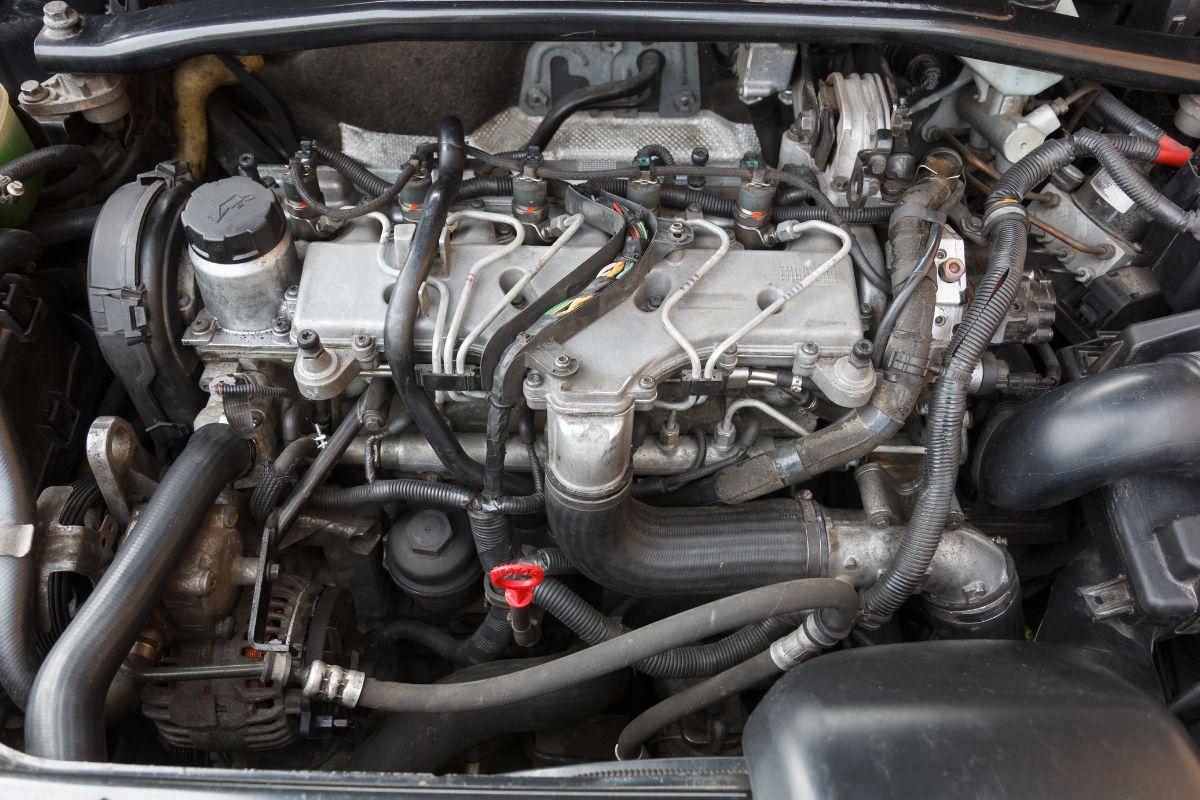
What is a V5 Engine?
The V5 engine is one of the rarest and most unusual engine configurations in automotive history. Unlike the more common inline-5 or V6 engines, the V5 engine features five cylinders arranged in a V-shape. This unique design was primarily used by Volkswagen in the late 1990s and early 2000s before it was phased out in favor of more conventional setups.Why Did Volkswagen Develop a V5 Engine?
Volkswagen developed the V5 engine as a compromise between their four-cylinder and V6 engines. It was designed to offer better balance, power, and smoothness compared to a four-cylinder while remaining more compact and lightweight than a V6. The engine was first introduced in the Volkswagen Golf and Passat models, offering a distinctive blend of performance and efficiency.How Does a V5 Engine Work?
Mechanically, the V5 engine is a variation of the VR6 engine, which uses a narrow-angle V configuration. Here’s how it works:- It features two cylinder banks, but instead of three cylinders per bank (as in a V6), one bank has two cylinders, and the other has three.
- This results in an offset firing order, making the engine sound different from inline-5 and V6 configurations.
- The compact design allows it to fit in smaller engine bays while still delivering decent power output.
| Specification | Details |
|---|---|
| Cylinders | 5 |
| Configuration | Narrow-angle V |
| First Production | 1997 |
| Common Models | Volkswagen Golf, Passat, Bora |
| Displacement | 2.3L |
| Power Output | ~150-170 HP |
What Are the Advantages of a V5 Engine?
Despite its unusual design, the V5 engine offers several advantages:- Compact Size – Takes up less space than an inline-5 or V6 engine.
- Improved Balance – Provides better balance than an inline-4, reducing vibrations.
- Unique Sound – The offset firing order creates a distinct exhaust note.
- Decent Power Output – Bridges the gap between smaller four-cylinder and larger six-cylinder engines.
- Better Torque Delivery – Offers good mid-range torque, making it suitable for daily driving.
What Are the Disadvantages of a V5 Engine?
While innovative, the V5 engine also had some downsides:- Complexity – Unusual cylinder arrangement made it harder to maintain.
- Limited Production – Fewer parts available, making repairs costly.
- Not as Smooth as a V6 – While more refined than a four-cylinder, it still didn’t match the smoothness of a true V6.
- Discontinued – Volkswagen eventually phased it out in favor of more efficient turbocharged four-cylinder engines.
What Cars Used the V5 Engine?
The V5 engine was mainly used in Volkswagen models, including:- Volkswagen Golf Mk4 V5 (1997-2003)
- Volkswagen Passat B5 V5
- Volkswagen Bora V5
How Does a V5 Engine Compare to an Inline-5 or V6 Engine?
To better understand the V5 engine, let’s compare it to inline-5 and V6 engines:| Feature | V5 Engine | Inline-5 Engine | V6 Engine |
| Cylinder Arrangement | V-shaped, narrow-angle | Straight-line | V-shaped, wider angle |
| Balance | Better than inline-4, but not as smooth as V6 | Good, but can have vibration issues | Very smooth |
| Size | Compact | Long | Larger |
| Common Manufacturers | Volkswagen | Audi, Volvo, Ford | Most brands |
| Sound | Unique, uneven | Warbling sound | Smooth hum |
Why Did Volkswagen Stop Making the V5 Engine?
Volkswagen discontinued the V5 engine due to several factors:- Turbocharged four-cylinder engines became more efficient and offered similar power with better fuel economy.
- Complexity and cost made it harder to justify mass production.
- Limited demand as most buyers preferred traditional inline-4 or V6 engines.
- Stricter emissions regulations pushed manufacturers toward more efficient engine designs.